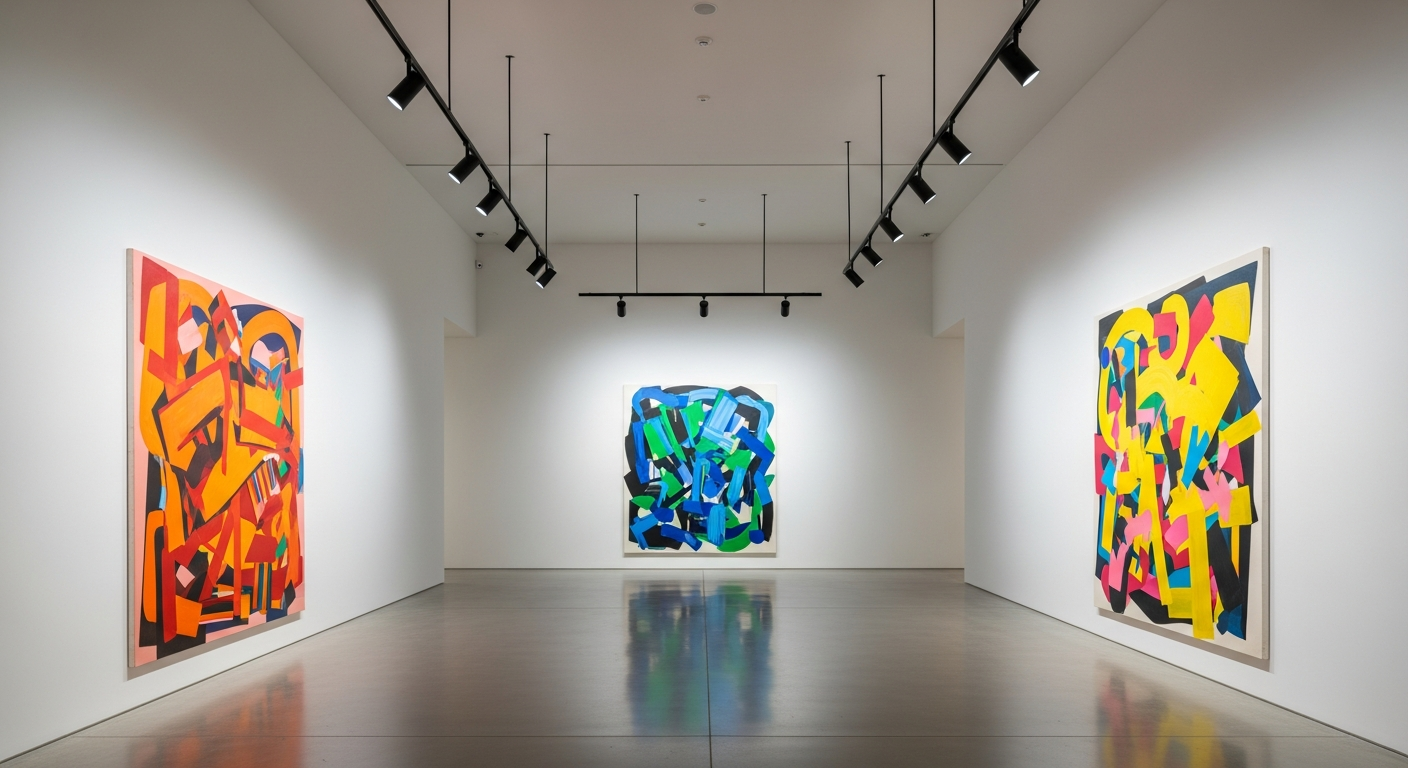
Blue-chip contemporary art has become one of the most discussed alternative asset classes of the past decade. The Citi Global Art Market Report consistently shows contemporary art delivering double-digit annual returns over rolling 10-year windows, with the post-war and contemporary segments specifically outperforming traditional art categories like Old Masters and Impressionism.
Three names define the modern collector's bridge between cultural relevance and financial discipline: KAWS, Banksy, and Jean-Michel Basquiat. Each represents a different era, price tier, and risk profile. Together they form a useful framework for understanding how art functions as an asset class.
Jean-Michel Basquiat: The Apex Tier
Basquiat is the most expensive American artist of all time. Untitled (1982), the famous skull painting, sold to Yusaku Maezawa at Sotheby's in 2017 for $110.5M — at the time the highest price ever paid for an American artist at auction. Recent major Basquiat sales have continued in the $40M–$110M range for top-quality canvases.
Investment-grade Basquiat tiers:
- Major canvases (1981–1984 prime period): $40M–$110M+ at auction. These are museum-grade works and rarely reach the market.
- Significant secondary works (1980, 1985–1988): $8M–$30M.
- Drawings and paper works: $300K–$3M depending on size, condition, and significance.
- Prints (limited editions): $50K–$300K. The accessible entry point to Basquiat.
Basquiat's appreciation has been remarkably consistent: roughly 15–20% annually for top-tier works since 2010. The supply is genuinely fixed — Basquiat died in 1988 at age 27, so no new works can ever enter the market. Every major Basquiat sale tightens the available float.
Banksy: The Cultural Phenomenon
Banksy occupies a unique position in the contemporary art market. The artist's anonymity, political messaging, and mass-cultural visibility create demand patterns that traditional art investment frameworks struggle to model.
The 2018 self-shredding "Girl With Balloon" stunt at Sotheby's, where Banksy partially destroyed a $1.4M painting moments after sale, perfectly illustrated the dynamic: the destroyed (renamed "Love Is in the Bin") subsequently resold for $25.4M in 2021 — an 18x return in three years.
Investment-grade Banksy tiers:
- Major canvases and panel works: $5M–$30M+ at auction. The top of the Banksy market.
- Notable signed prints (Pest Control authenticated): $200K–$2M depending on edition size, image, and condition.
- Standard signed prints: $30K–$200K.
- Unsigned prints (Pest Control authenticated): $10K–$50K.
The Pest Control issue. Authentication is the single largest variable in Banksy investing. Pest Control Office is the only authority Banksy recognizes for authentication. Works without Pest Control authentication trade at 50–80% discounts to authenticated equivalents. For any Banksy purchase above $50,000, Pest Control authentication is essentially required.
KAWS: The Generational Bridge
KAWS (Brian Donnelly) has become the most commercially successful living contemporary artist by sales volume. His Companion characters, derived from cartoon iconography, bridge fine art collecting and streetwear/sneaker culture in ways that have created an entirely new collector base.
Investment-grade KAWS tiers:
- Major canvases (2010+): $1M–$15M at auction. The "KAWS Album" sold for $14.8M at Sotheby's Hong Kong in 2019.
- Bronze and fiberglass sculptures (museum scale): $500K–$5M.
- Small bronze sculptures and Companion figures (limited editions): $50K–$500K.
- Vinyl Companion figures (resale): $5K–$50K depending on edition and condition.
KAWS has generated genuine debate among traditional art collectors. The bull case: he has expanded the contemporary art collector base by 10x and brought a new generation into serious collecting. The bear case: much of the price action is driven by streetwear collectors with limited fine art context, which could lead to volatility if cultural attention shifts. Both arguments have merit.
How Art Actually Functions as an Asset
Art investing differs structurally from every other luxury asset category in three important ways:
Liquidity is asymmetric. Top-tier works are highly liquid — major auctions happen monthly, and consignment-to-sale typically takes 4–8 weeks. Mid-tier and lower-tier works can take 6–18 months to sell at fair value, often longer. The liquidity gap between "top of an artist's market" and "everything else by the same artist" is enormous.
Storage and insurance costs are real. A $5M canvas requires climate-controlled storage ($3,000–$8,000/year), insurance (0.5–1.0% of value annually), and periodic conservation. Total carrying costs run 1.5–3% of value per year — meaningful drag on returns over long holding periods.
Authentication and provenance are everything. The forgery rate in contemporary art is significant. Major auction houses have entire departments dedicated to provenance verification. For any purchase above $100K, demand documented provenance back to the artist or first sale, plus authentication from the recognized authority for that artist (Pest Control for Banksy, the Basquiat estate authentication committee, KAWS Studio for KAWS).
Building an Art Allocation
Defensible frameworks at different scale tiers:
$50K–$200K: Focus on prints and editions from blue-chip artists. KAWS Companion editions, Banksy signed prints (Pest Control authenticated), Basquiat prints. Buy through major auction houses or recognized print dealers (Pace Prints, Two Palms). Avoid non-edition unique works at this price point — too much risk of forgery or attribution issues.
$200K–$1M: Mix of major prints and minor unique works. Consider one significant Banksy print, one KAWS sculpture, and one Basquiat drawing or paper work. Engage an art advisor (Pall Mall Art Advisors, ArtAgent, or independent specialists) — at this level, advisor fees pay for themselves through deal sourcing and authentication.
$1M+: Now you're collecting at the unique-work level. Engage a dedicated advisor with relationships at Sotheby's, Christie's, Phillips, and major galleries (Gagosian, Hauser & Wirth, David Zwirner). At this scale, the relationships matter as much as the capital.
Across all tiers: Document everything. Keep all auction catalogs, condition reports, authentication paperwork, conservation records, and exhibition history. The administrative file is part of the asset's value.
Track Luxury Asset Values on LuxMetrix
LuxMetrix is building transparent pricing intelligence across luxury assets including blue-chip contemporary art. Our art coverage will track Basquiat, Banksy, KAWS, and other key contemporary artists using auction-verified pricing data.
Become a Founding Member — the first 1,000 members receive complimentary Vault access for 12 months ($1,188 value).
LuxMetrix provides fair market value estimates based on publicly available auction data. These are not financial recommendations or appraisals. Always engage qualified art advisors and authentication experts before making major purchases.