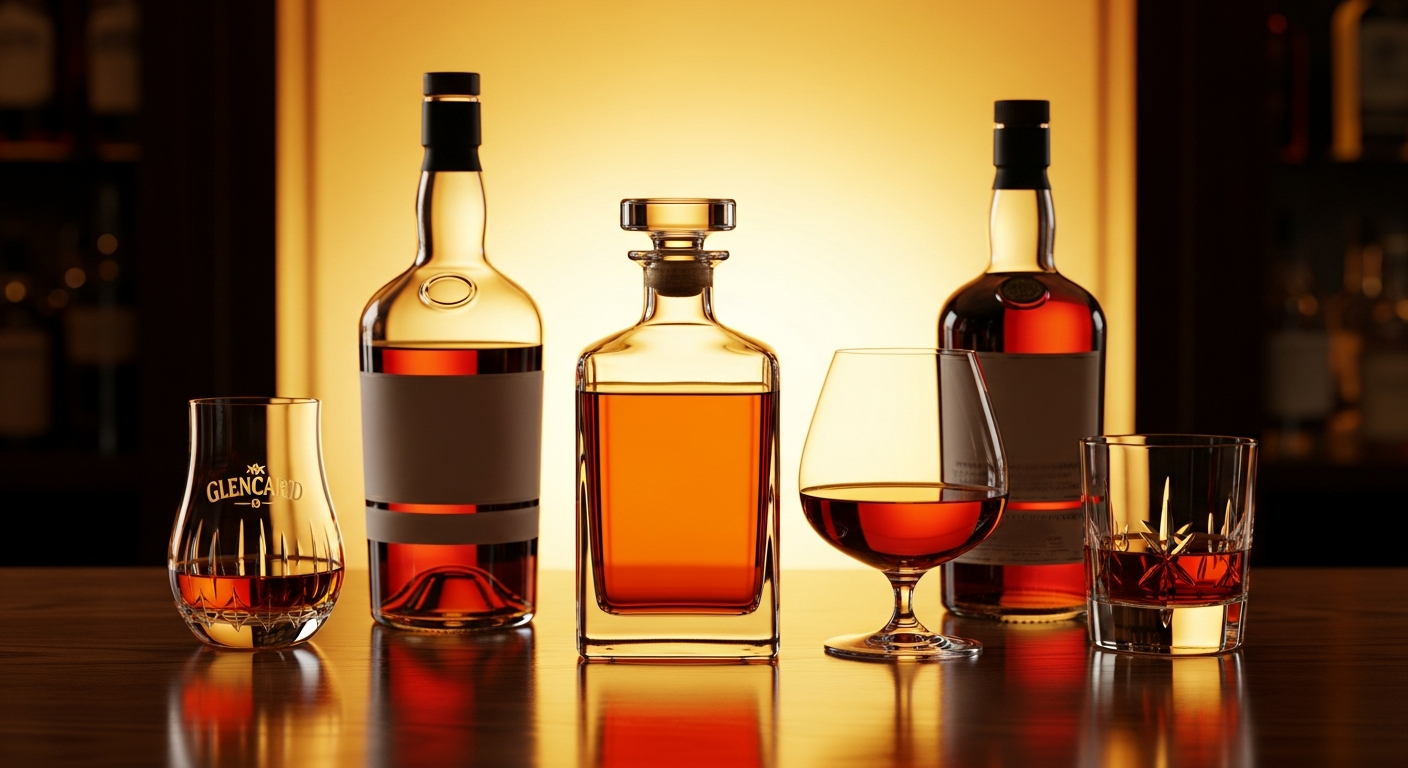
Investment-grade wine and whisky have quietly become one of the strongest-performing alternative asset classes of the past decade. The Knight Frank Luxury Investment Index ranks rare whisky and fine wine consistently among the top three luxury asset categories by appreciation, frequently outperforming watches, art, and even classic cars.
But like every collectible market, the difference between investment grade and commodity grade is enormous. Three names define the elite tier of liquid assets: Macallan, Yamazaki, and Domaine de la Romanée-Conti. Here's what serious collectors need to know.
Macallan: The Anchor of Investment Whisky
The Macallan has been the most reliable investment whisky for over two decades. Its core appeal: tightly controlled scarcity, cask-driven production methodology, and a distillery brand recognized by every serious collector globally.
Investment-grade Macallan in 2026:
- Macallan 1926 Fine and Rare 60-Year-Old: The most expensive whisky ever sold. A 1926 in Sir Peter Blake label sold for $2.7M at Sotheby's in 2023. Only 14 bottles ever produced. These now trade at $2M–$3M+ per bottle.
- Macallan 1950s–1970s vintages: $40,000–$300,000 per bottle depending on age, cask, and label series. The Anniversary series and Lalique decanters drive the highest premiums.
- Macallan 25 Sherry Oak (current release): $4,500 retail, $6,500–$8,500 secondary. The most accessible entry point with strong appreciation history.
- Macallan 18 Sherry Oak (current release): $400 retail, $700–$1,200 secondary. Entry-level investment whisky with consistent year-over-year appreciation.
Yamazaki: Japanese Whisky's Premier Investment
Suntory's Yamazaki is the Macallan equivalent of Japanese single malt — the brand that drives the entire investment-grade Japanese whisky market. Production constraints at Yamazaki are genuinely extreme: the distillery has been operating beyond capacity for over a decade.
Investment-grade Yamazaki in 2026:
- Yamazaki 55 Year Old: $795,000 release price in 2020. Current secondary market: $1.2M–$1.8M. One of only 100 bottles ever released.
- Yamazaki 50 Year Old (1st Edition, 2005): $300,000–$450,000. Only 50 bottles produced.
- Yamazaki 25 Year Old: $5,000 retail (when available — almost never), $9,000–$13,000 secondary.
- Yamazaki 18 Year Old: $400 retail, $1,200–$1,800 secondary. Has appreciated 4x in five years due to global supply constraints.
Yamazaki has structural advantages over Macallan: the distillery cannot easily expand production, Japan's domestic market continues to grow, and the brand has become aspirational across all of Asia.
Domaine de la Romanée-Conti (DRC): Wine's Apex
If Macallan is the anchor of whisky and Yamazaki is the apex of Japanese, DRC is the absolute summit of investment-grade wine. The Burgundy estate produces only ~7,000 cases per year across all of its labels combined — less than a single mid-size Bordeaux producer makes in a season.
Investment-grade DRC in 2026:
- Romanée-Conti Grand Cru: $35,000–$75,000 per bottle for current release vintages. Mature vintages from great years (1990, 2005, 2010) trade at $100,000–$250,000+.
- La Tâche Grand Cru: $8,000–$18,000 per bottle current release. The accessible entry point to DRC.
- Richebourg, Romanée-Saint-Vivant: $4,000–$8,000 per bottle.
- Échezeaux, Grands Échezeaux: $2,000–$5,000 per bottle. Often considered the best value in the DRC range.
DRC's appreciation pattern follows a J-curve: minimal movement for the first 5–10 years post-release, then accelerating appreciation as the wine enters its drinking window and supply contracts. Buying current release and holding 15+ years has historically produced 8–12% annual returns net of storage costs.
The Operational Reality: Storage, Provenance, Authentication
Investment-grade liquid assets require more operational discipline than any other luxury category. The reasons:
Provenance is everything. A Macallan 1926 with documented chain of custody from distillery to bonded warehouse to auction house is worth $2M+. The same bottle without provenance might sell for $400K — if it sells at all. Counterfeit operations have become sophisticated, and major auction houses (Sotheby's, Christie's, Whisky.Auction) now refuse consignments without complete documentation.
Storage is non-trivial. Wine requires consistent temperature (55°F), humidity (60–70%), and darkness. Whisky is more forgiving but still benefits from controlled conditions. Bonded warehouses (Octavian for wine, Whisky Investment Partners for whisky) charge $5–$15 per bottle annually — meaningful at scale, but the only way to preserve provenance.
Liquidity windows matter. Wine and whisky don't trade daily. Major auctions happen 4–6 times per year. Selling outside auction windows requires private treaty sales at 10–20% discounts. Plan exits 6–12 months in advance.
Building a Liquid-Asset Portfolio
For collectors building a serious liquid-asset allocation, here's a defensible framework:
$100K allocation: 60% Macallan (mix of 18, 25, and one rare bottling), 20% Yamazaki 18, 20% DRC Échezeaux current release. Build position over 12–18 months to average pricing.
$500K allocation: 40% Macallan (including one $50K+ rare bottling), 25% Yamazaki (mix of 18, 25, plus one limited release), 35% DRC (mix of Échezeaux, La Tâche, and one Richebourg). Use Octavian or equivalent bonded storage from day one.
$2M+ allocation: Now you're collecting. 35% Macallan (including 1950s–60s vintages), 25% Yamazaki (with at least one 50-year edition exposure), 40% DRC (full range from Échezeaux through La Tâche, ideally one Romanée-Conti current release). Engage a specialist advisor — at this scale, mistakes are expensive.
Track Luxury Asset Values on LuxMetrix
LuxMetrix is building transparent pricing intelligence across luxury assets, including investment-grade wine and spirits. Our liquid-asset coverage will track Macallan, Yamazaki, DRC, and other blue-chip references using auction data and verified marketplace transactions.
Become a Founding Member — the first 1,000 members receive complimentary Vault access for 12 months ($1,188 value).
LuxMetrix provides fair market value estimates based on publicly available auction data. These are not financial recommendations or appraisals. Always consult qualified specialists before making investment decisions.