There is a peculiar logic to luxury: The surest way to make something more valuable is to stop making it. This month’s cover proves it in the extreme. A watch its own maker discontinued, at the height of demand, that promptly quadrupled. We built LuxMetrix to cut through the folklore around numbers like these. Every figure in these pages is computed from real auction results and marketplace transactions, updated daily. The stories are human; the valuations are not.
This reminds me of a boy I used to be. Two streets from my grandmother’s house stood a shop that sold a single gold-foiled chocolate coin each Christmas — one box a year, never restocked. I spent a whole December saving for the last one on the shelf, and when it was finally mine, I found I couldn’t bring myself to eat it. It lived in my sock drawer for three years. Every friend who saw it wanted it, precisely because none of them could have one. The chocolate went chalky and grey; it didn’t matter. That was my first lesson in value — a thing is worth most in the moment just before you’re told you can’t have it.
Welcome to the first issue.
— Lux Luther, Editor
02The Spotlight · Patek Philippe Nautilus
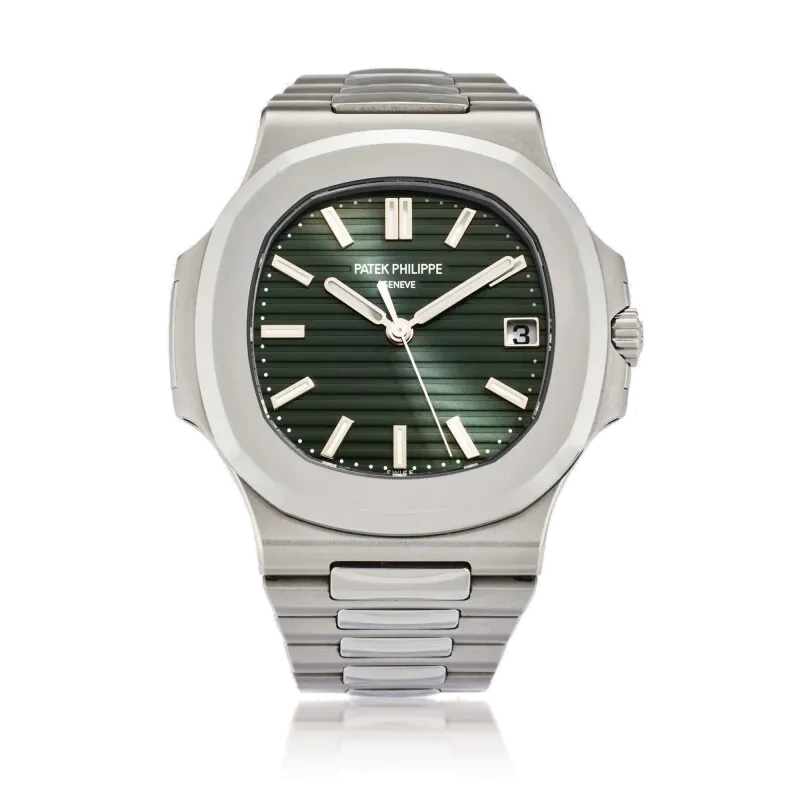
The Watch That Got More Valuable By Dying
In 2021, the president of Patek Philippe killed the most wanted watch in the world — on purpose. The steel Nautilus 5711 had waitlists measured in years; some buyers never got the call. Thierry Stern discontinued it anyway. His reasoning was not commercial but existential: “When you have a fantastic brand like Patek, you have to protect the brand, not just one product.” One watch was becoming the entire house. So he walked away from a money printer.
The irony wrote itself. Killing the 5711 made it immortal. Its retail price was roughly $34,900. Today, LuxMetrix pegs its fair market value at $145,822 — more than four times list. And the very first Tiffany-blue 5711 sold at Phillips in December 2021 for $6,500,000, with proceeds to charity. Scarcity built that number. Not marketing.
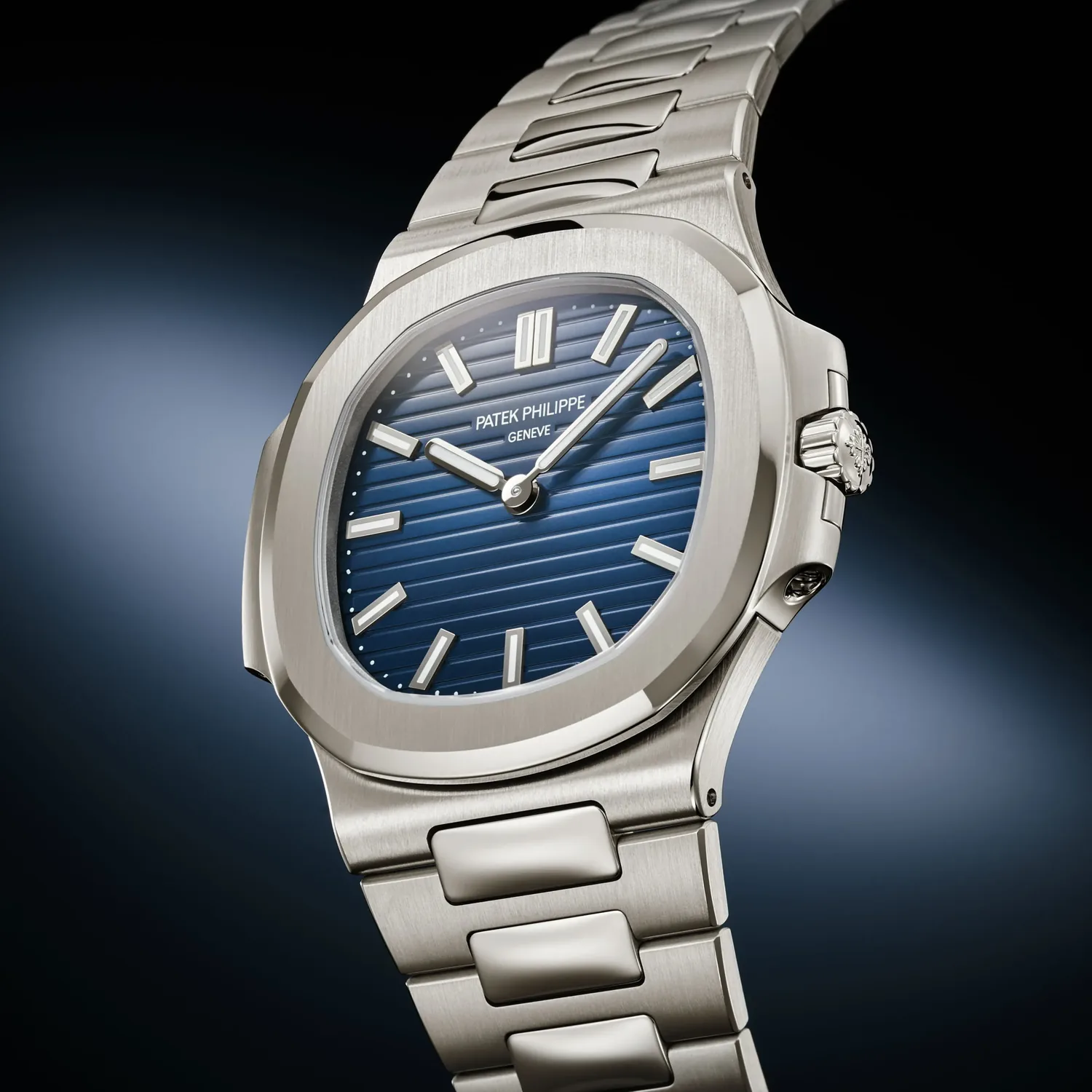
The Nautilus endures — Patek’s blue-dial reference. The steel 5711 that made it a phenomenon was discontinued in 2021; the line lives on.
Sometimes — and the difference between the watches that are and the ones that aren’t is the whole game.
The honest answer is uncomfortable for both camps. To the dealer who tells you every Rolex is “an investment,” the data says no. To the purist who insists a watch is only ever a toy, the data also says no. The truth is bimodal, and the average is a lie that sits in the empty valley between two peaks.
At one peak: a narrow band of supply-constrained grails — the steel Nautilus, the ceramic Daytona, the Royal Oak “Jumbo,” the Aquanaut — that have appreciated dramatically and, crucially, held those gains through a correction that wiped out the speculative froth of 2022. Our own cover watch is the cleanest proof on the board: roughly $34,900 at retail, $145,822 today. That is not a watch that went up. That is an asset that happened to tell time.
At the other peak sits the broad middle of the market — the vast majority of fine watches — trading at or below retail the moment the box leaves the boutique. A gray-market discount is not a scandal; it is the resting state of anything produced in sufficient numbers to actually buy. Averages hide this completely. You cannot value a market reference by reference from a headline. You have to price the individual object.
“A watch becomes an asset only when more people want it than can have it — and stay wanting it after the hype has gone.”
Then there is the part the appreciation charts never show: the cost of carry. A watch pays no dividend and no rent. It asks you for money — a service every five to seven years that runs into four figures on a complicated piece, insurance, a safe, and the quiet tax of illiquidity. Selling is not a market order. It is a consignment, a 10–25% dealer spread or an auction commission, and a wait. An asset you cannot exit at a known price on a known day is an asset with an asterisk.
So the collector’s test is not “will it go up?” It is narrower and more honest:
Scarcity that is structural, not seasonal. Is supply capped by the maker — a discontinued reference, a real multi-year waitlist — or merely fashionable this year? Fashion reverses; scarcity compounds.
Liquidity you can name. Could you sell it next Tuesday, and roughly for how much? If you can’t answer within a 10% band, it’s a possession, not a position.
A price you can verify. Not a dealer’s wink or a forum’s hope — an actual, recent, comparable transaction. If the only number is the one you paid, you own a receipt, not a return.
The rule for 2026, then, is discipline over romance: treat appreciation as the exception it statistically is, buy only quality you would happily wear if its value never moved again, and never confuse a receipt with a return. The watches that turned out to be assets were, almost without exception, the ones bought to be kept. Track the real number — and let the data, not the hype, tell you what you actually own.
05What's New in Luxury
Objects of Desire
Four things the market is chasing this month — and the numbers that prove it.
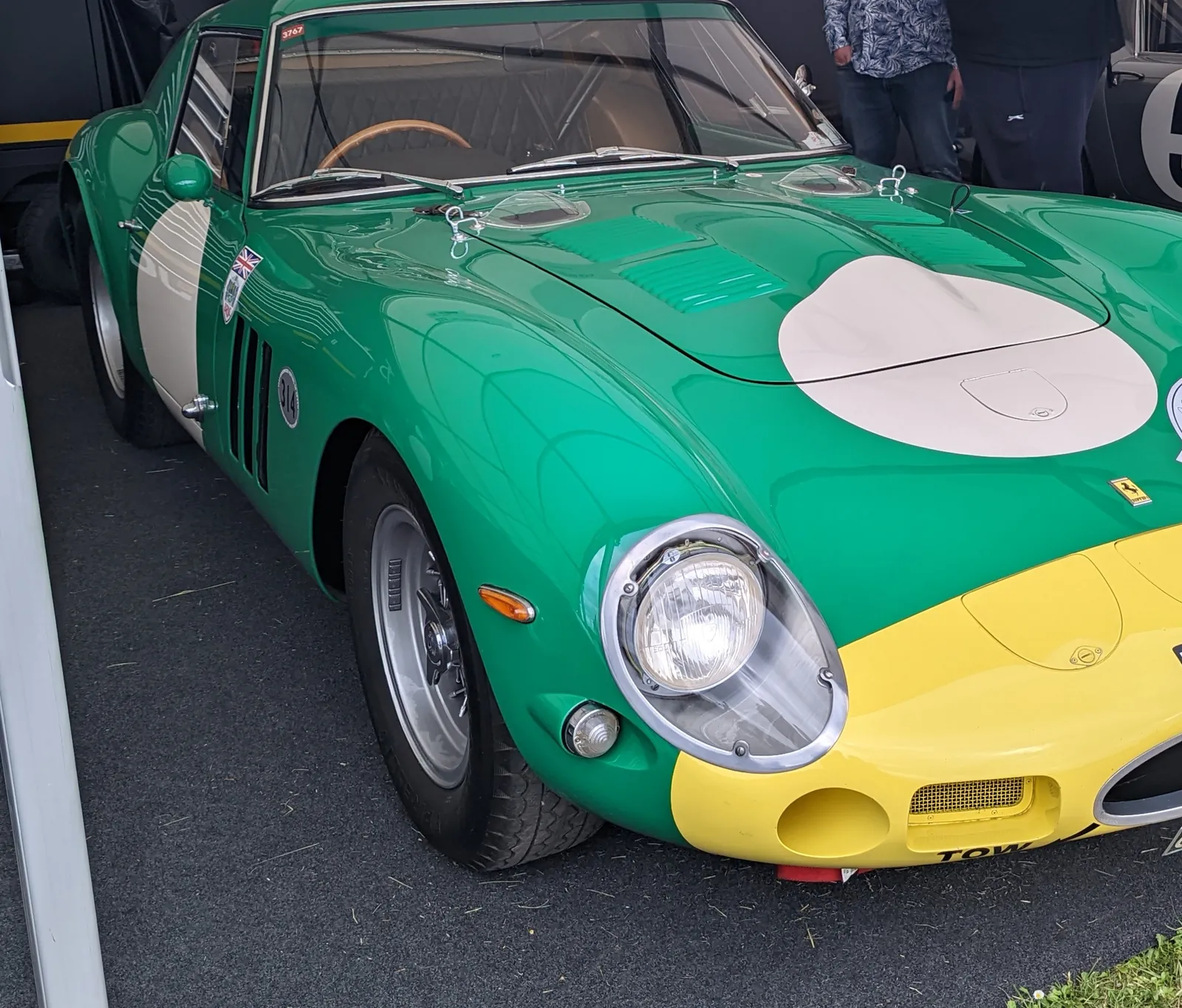
The Ferrari 250 GTO — only 36 were ever built, and they remain the most valuable cars on earth. Photo: Calreyn88 / CC BY-SA 4.0
Rare Whisky$1.05M
Yamazaki 50 “Club Natsume”
Suntory’s second-oldest expression, bottled for the 50th anniversary of a members-only Nagoya bar. In May it became the most expensive Japanese whisky ever sold at auction — nearly doubling its high estimate. Yamazaki 50 has been released only three times in history.
Bonhams Hong Kong · May 2026
Watches~5,100
Patek Nautilus, 50th Anniversary
Patek marked half a century of Gérald Genta’s Nautilus with four commemorative references — all precious metal, blue anniversary dials, no steel. A hard-capped run led by the platinum 5610/1P at 2,000 pieces. Consider it the sequel to this issue’s cover.
Total pieces worldwide
Collector Cars$38.5M
Ferrari 250 GTO (1962)
The blue-chip of blue-chip collector cars — only 36 were ever built, and they remain the most valuable automobiles on earth. This one anchored a record-setting Ferrari run where even a 2003 Enzo stunned the room at $17.9M.
Mecum Kissimmee · Jan 2026
Watches~$400
Swatch × Audemars Piguet “Royal Pop”
The most divisive drop of the year: AP lent the Royal Oak silhouette to Swatch for a Bioceramic, pop-art pocket-watch. Haute horlogerie meets MoonSwatch mania — one per person, per store, per day. The industry is still arguing about whether it was genius or heresy.
Selected Swatch stores
06The Escape · Luxury Travel
A Pilgrimage Through the Vallée de Joux
An hour from Geneva, in the valley that invented the complicated watch — where the winters that made the movements still glow gold against the pines.
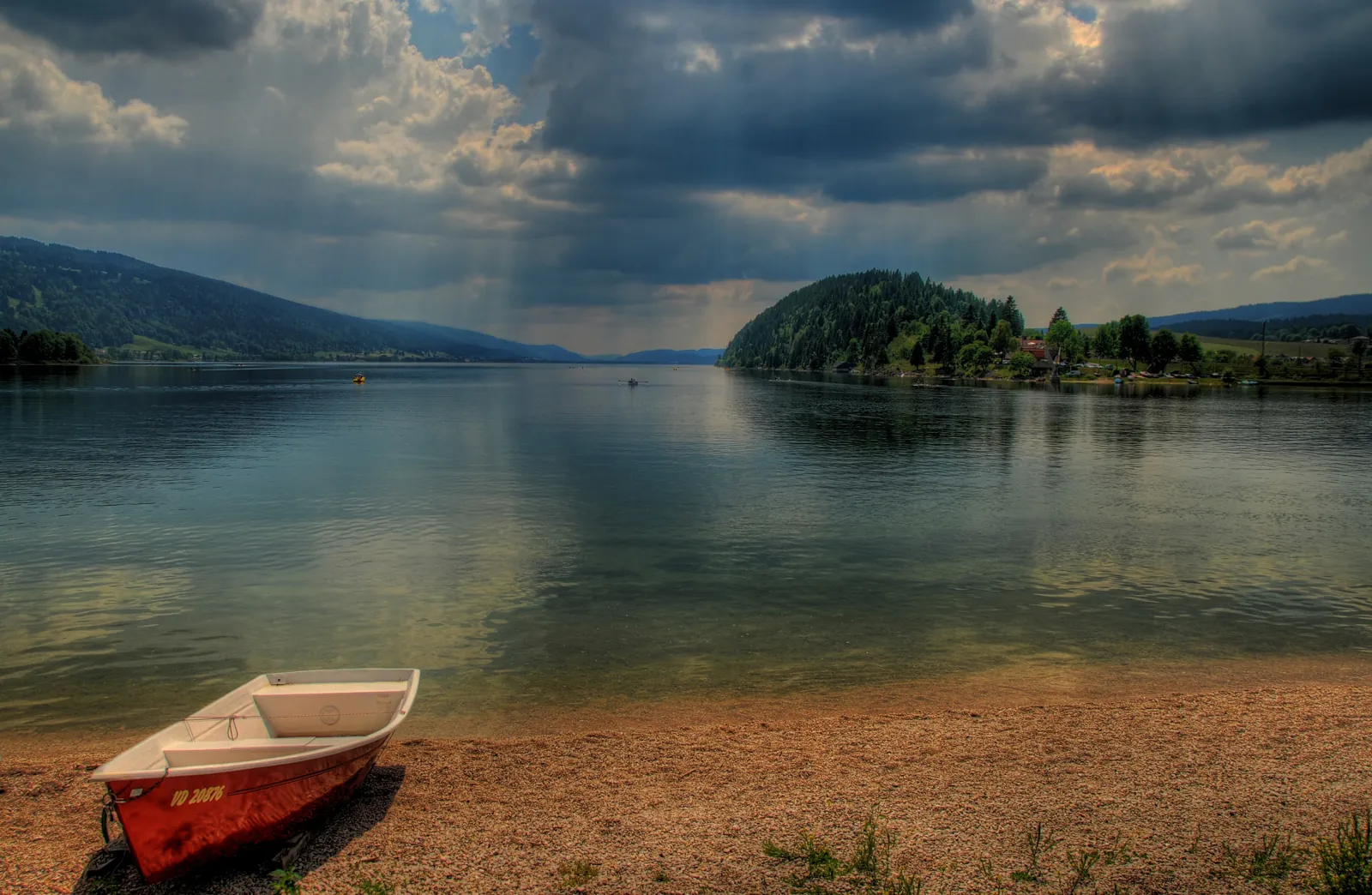
Lac de Joux, cradled in the Swiss Jura — the largest lake above 1,000 metres in Switzerland. Photo: Ricardo Hurtubia / CC BY 2.0
There is a narrow Swiss valley, an hour from Geneva and a thousand metres closer to heaven, where the watches in this magazine are born. The Vallée de Joux cradles a long glacial lake in the Jura, its western wall the great Risoud forest that marks the border with France. For roughly half the year the passes snow shut. That this became the cradle of haute horlogerie is not a coincidence — it is the reason.
Farming here was a summer occupation; winter was long, dark, and idle, and idleness in the eighteenth century was a threat to survival. So the valley’s farmers took up a second trade at the workbench — cutting wheels, springs, and bridges by lamplight through the frozen months. A local iron industry had seeded the metalworking skill; watchmakers returning to the valley taught the rest. Out of that discipline — patient hands, indoors, waiting out the snow — came Audemars Piguet (Le Brassus, 1875), Jaeger-LeCoultre (Le Sentier, 1833), Blancpain, and the movement ateliers of Patek Philippe. For over a century, nearly every ultra-complicated watch on earth was conceived in this one remote place. To arrive as a collector is to arrive at the source.
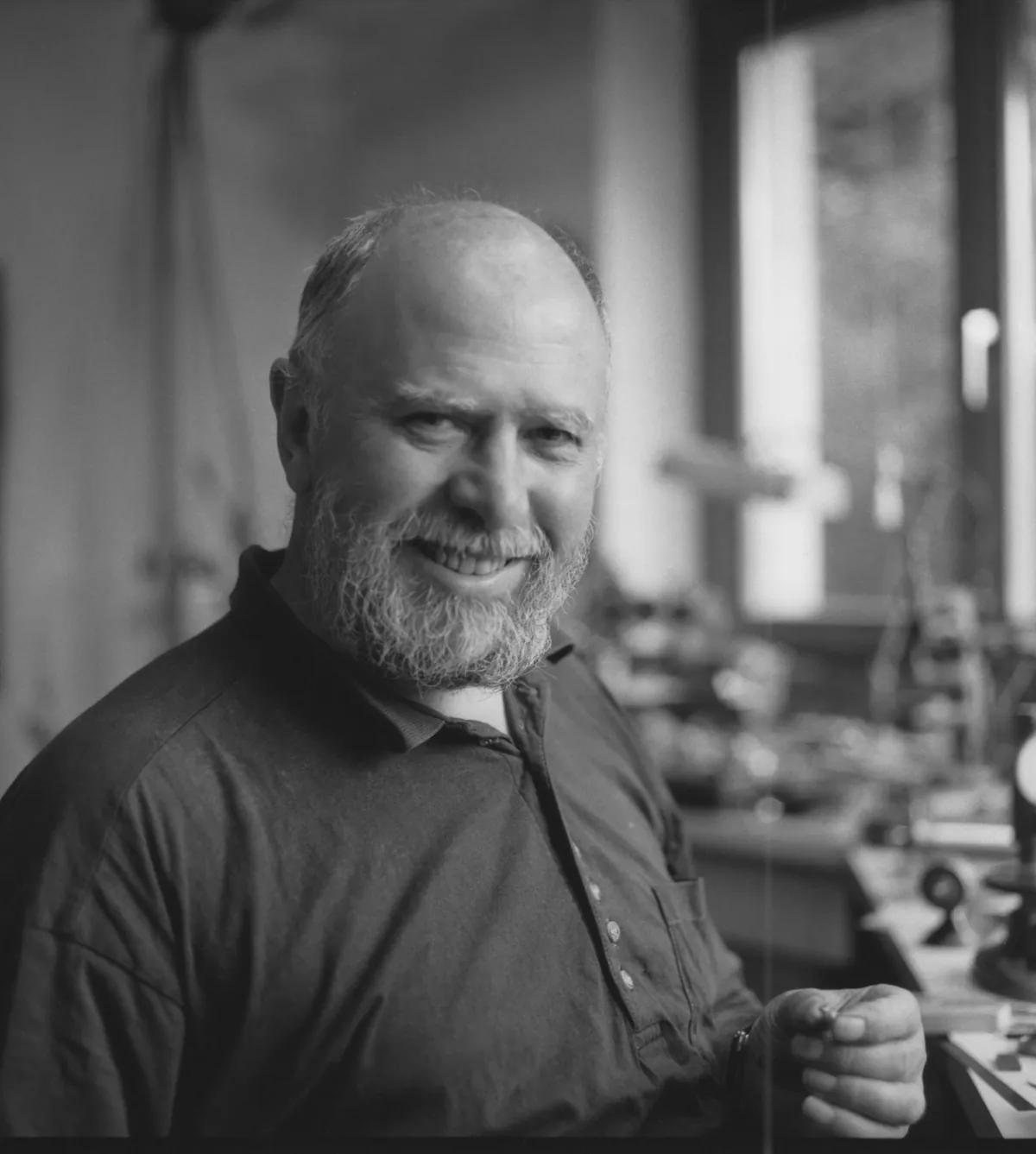
The craft endures — a master watchmaker at his Swiss bench. Photo: Juliet Haller / CC BY-SA 4.0
Where to Stay
Hôtel des Horlogers
Begin at the obvious cathedral. Owned by Audemars Piguet and designed by Bjarke Ingels’ BIG — the same studio behind the museum next door — the Hôtel des Horlogers is a single building of five sloping ramps that zigzag down into the hillside, its roofline echoing the fall of the Jura terrain. Fifty rooms, a Michelin-listed address, and a concierge who can arrange the manufacture visits most collectors travel here for. For a lakeside counterpoint, the modest, shore-side Hôtel Bellevue Le Rocheray near Le Sentier or the old inn Hôtel de la Truite at Le Pont trade design pedigree for water at the doorstep. (Confirm current rooms and rates directly — these are small houses.)
Where to Eat
La Table des Horlogers — & a cheese in a spruce box
The hotel’s dining is overseen by Emmanuel Renaut, the three-Michelin-star chef of Flocons de Sel in Megève and a Meilleur Ouvrier de France. His gastronomic room, La Table des Horlogers, is built as a walk through the Risoud forest — the fish and the farmers chosen by name; his brasserie, Le Gogant, is the easier, open-to-all table. But the valley’s true delicacy is humbler and seasonal: Vacherin Mont-d’Or AOP, a soft, spruce-bound winter cheese born in these dairies, eaten warm and spooned straight from its round wooden box. Pair it with a Vaud Chasselas from the Lavaux terraces you passed on the drive up. Come between autumn and March, or you will miss it entirely.
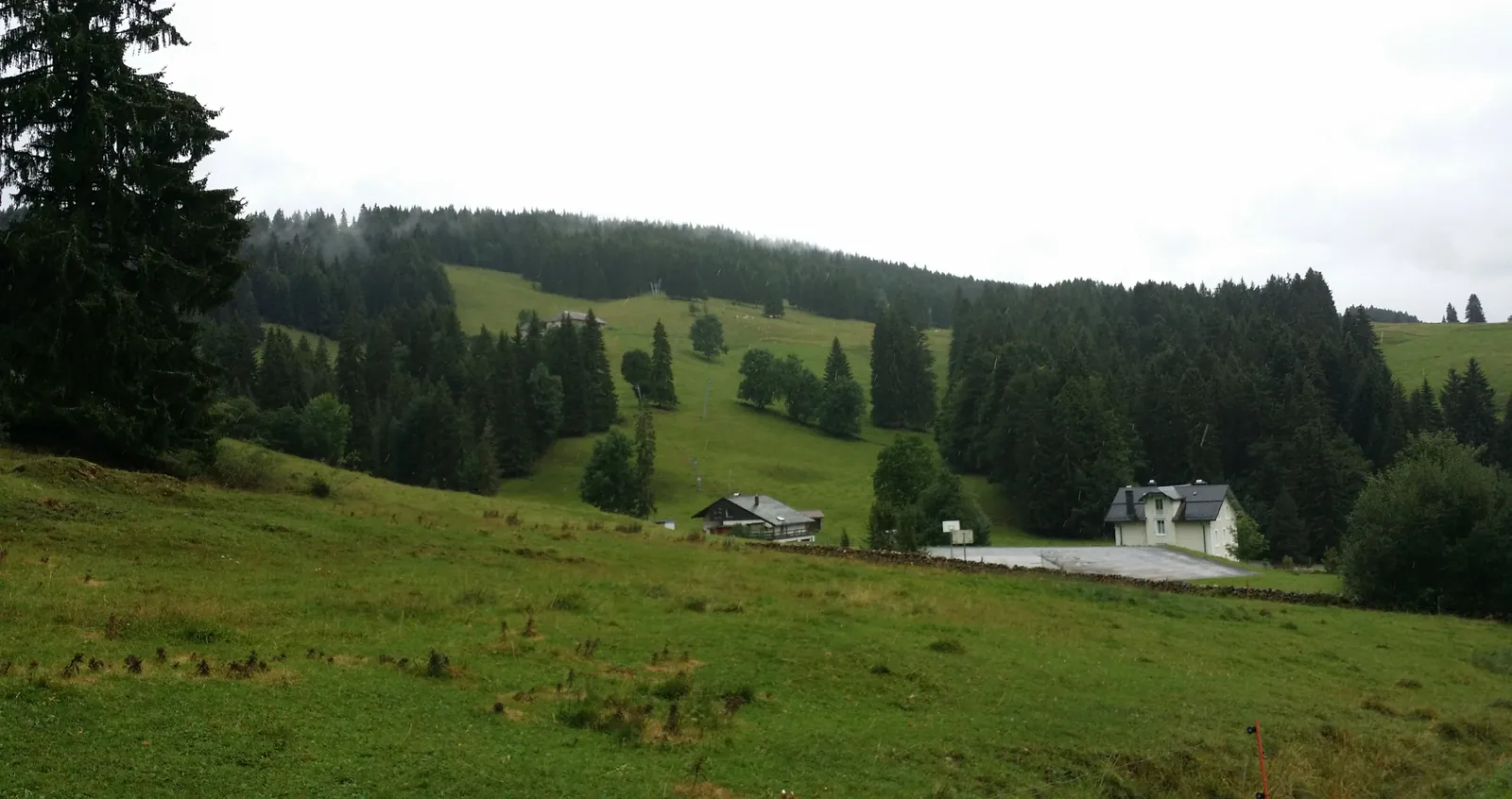
Misty pastures above Le Brassus — pine, chalet, and low fog, in the heart of the Vallée de Joux. Photo: Shev123 / CC0
What to See
The spiral, the manufacture, the frozen lake
The pilgrimage’s high altar is the Musée Atelier Audemars Piguet — a coiling glass spiral inspired by a balance spring, 108 curved panes under a grass roof, unwinding off the 1875 founders’ house, with living watchmakers at work inside. It is open to the public by guided visit only, six to a tour, booked well ahead; do not arrive expecting to walk in. A few minutes away in Le Sentier, the independent Espace Horloger tells the whole valley’s story (open Tuesday–Sunday), and Jaeger-LeCoultre runs a three-hour Manufacture visit by reservation — reserve early, the slots vanish. Then step outside the ateliers: in a hard winter, Lac de Joux freezes into the largest natural skating surface in Europe (weather permitting — it is a hope, never a guarantee); in any season, climb the Dent de Vaulion for a 360° panorama of eight lakes and Mont Blanc, or walk the signed tonewood trail into the Risoud, where roughly one spruce in ten thousand is fine enough to become a violin’s soundboard. The same silent valley that perfected the movement perfects the resonance of wood — precision as the answer to isolation.
Field Notes
Getting thereGeneva (GVA) ~1–1.5 hrs by car; hourly rail from Geneva Cornavin to Le Sentier (~2 hrs).
When to goWinter for the frozen lake, the Vacherin, and the romance; late spring–autumn for hiking and every museum open.
Book aheadThe AP museum and the JLC manufacture are appointment-only and sell out — reserve weeks in advance. Patek’s valley sites are not open to the public.
07The Address · Property of the Month
Partner Feature
Your Listing, In Front of Collectors
This is where a featured luxury property from a LuxMetrix real-estate partner appears each month — presented to an audience that already collects assets. Trophy estates, waterfront, and off-market opportunities.