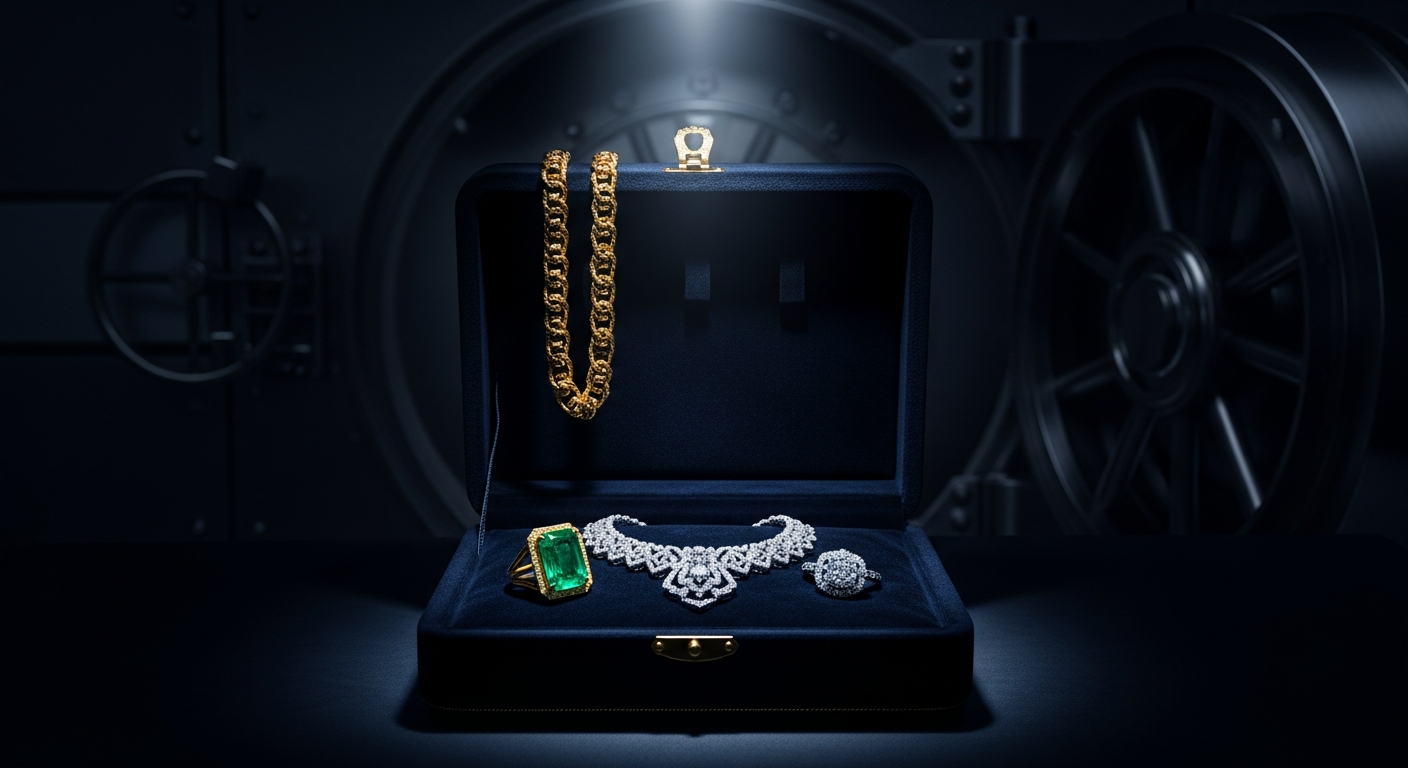
Fine jewelry has always been a store of wealth — long before stocks, bonds, or real estate became mainstream investment vehicles. Kings stored fortunes in gemstones they could carry across borders. Families passed down Cartier pieces as generational assets. And today, as inflation erodes currency values and markets swing unpredictably, a growing number of high-net-worth individuals are rediscovering what the old money always knew: the right jewelry doesn't just hold value — it appreciates.
But not all jewelry is created equal. The difference between a piece that holds its value and one that depreciates the moment you leave the boutique comes down to brand, craftsmanship, materials, and scarcity. Here's what the data shows about fine jewelry as a serious alternative asset class.
The Brands That Hold Value
In fine jewelry, brand is everything. The same 18k gold bracelet from an unknown jeweler might retail for $3,000 and resell for $1,200. The same bracelet from Cartier retails for $7,800 and resells for $5,500. The difference is brand equity — the intangible premium that collectors pay for heritage, craftsmanship, and prestige.
Cartier: The undisputed leader in jewelry value retention. The Love Bracelet, Juste un Clou, and Trinity rings all trade at 65–85% of retail on the secondary market. Cartier's annual price increases (5–8%) create a rising floor that supports pre-owned values. Vintage Cartier from the 1970s–1990s has entered genuine collector territory.
Van Cleef & Arpels: VCA's Alhambra collection has become the most recognizable fine jewelry line in the world. The Vintage Alhambra necklace in onyx or mother-of-pearl retains 80–95% of retail value — among the highest in the industry. Limited availability and long boutique wait times create genuine scarcity.
Tiffany & Co.: Post-LVMH acquisition, Tiffany has elevated its positioning significantly. The T collection and HardWear line hold value better than pre-acquisition pieces. Vintage Tiffany — particularly Schlumberger and Elsa Peretti designs — has appreciated meaningfully, with some pieces trading above original retail.
Buccellati: The Italian house known for its distinctive hand-engraved textures. Production numbers are tiny compared to Cartier or VCA, which creates genuine scarcity. Buccellati pieces hold value exceptionally well and are increasingly sought after at auction.
Bulgari: The Serpenti and B.zero1 collections are the strongest performers. Bulgari has followed Cartier's playbook of annual price increases, which supports secondary market values. High-jewelry one-of-a-kind pieces from Bulgari have performed well at Christie's and Sotheby's.
Gold Content: The Built-In Floor
Every piece of fine jewelry in 18k gold carries an intrinsic floor value based on its gold content. This is fundamentally different from fashion, electronics, or other luxury goods that can depreciate to near zero.
Consider a Cartier Love Bracelet: approximately 32 grams of 18k gold. At current gold prices (~$2,400/oz for 24k, adjusted for 75% purity in 18k), the melt value is roughly $1,850. The bracelet retails for $7,800 and resells for $5,200–$6,800. Even in a worst-case scenario where the Cartier brand somehow lost all prestige, you'd still recover $1,850 in gold value.
As gold prices rise — and they've risen roughly 8% annually over the past 20 years — this floor rises with them. Fine jewelry is effectively a gold position wrapped in craftsmanship and brand equity.
Platinum provides a similar floor, though platinum prices are more volatile than gold. Sterling silver jewelry has negligible melt value and should not be considered a store of wealth.
Gemstones: Where Real Appreciation Lives
While branded gold jewelry holds value well, the real appreciation in fine jewelry comes from exceptional gemstones. The key word is exceptional — average quality stones depreciate, while top-tier stones appreciate.
Natural diamonds: Despite the De Beers marketing myth, most diamonds are not good investments. Standard commercial-quality diamonds (1-2 carat, VS clarity, G-H color) have actually depreciated in real terms over the past decade, partly due to lab-grown competition. However, exceptional natural diamonds — 5+ carats, D-F color, IF-VVS1 clarity, and especially fancy colored diamonds — have appreciated 3–8% annually.
Kashmir sapphires: The holy grail of colored gemstones. Mining ceased in the early 1900s, making the supply permanently fixed. A fine Kashmir sapphire can sell for $50,000–$200,000 per carat at auction. These have appreciated 10–15% annually over the past two decades.
Burmese rubies: "Pigeon blood" Burmese rubies from the Mogok Valley are among the rarest gems on earth. Fine examples regularly exceed $1 million per carat at auction. Supply is constrained by both geological scarcity and geopolitical sanctions.
Colombian emeralds: Top-quality Colombian emeralds from the Muzo mine have seen strong appreciation, particularly stones with vivid green saturation and minimal treatment. The market for fine emeralds is less liquid than diamonds or sapphires, but prices at the top end continue to climb.
The Auction Market: Real Price Discovery
The auction houses — Christie's, Sotheby's, and Bonhams — provide the most transparent price discovery for fine jewelry. Unlike retail, where markups are 2–4x wholesale, auction results reflect genuine market demand.
Key trends from recent auction seasons:
Signed pieces outperform unsigned. A diamond ring from Cartier, Van Cleef, or Harry Winston consistently sells for 30–50% more than an equivalent unsigned piece with identical stones. The signature is worth real money.
Provenance matters enormously. Elizabeth Taylor's Bulgari emerald and diamond necklace sold for $6.1 million — roughly 10x its intrinsic value. Celebrity and historical provenance can multiply value dramatically, though this is obviously hard to replicate.
Art Deco and Retro periods are surging. Jewelry from the 1920s–1940s has seen the strongest appreciation among vintage categories. The craftsmanship of this era — hand-cut calibré stones, milgrain detailing, geometric designs — cannot be economically reproduced today.
How to Buy Jewelry for Value Retention
If preserving value is a priority (alongside enjoyment), follow these principles:
Buy the brand. Cartier, Van Cleef & Arpels, Buccellati, and Bulgari consistently hold value. Unknown or fashion brands depreciate rapidly.
Buy classic, not trendy. The Cartier Love Bracelet has been in production since 1969 and shows no sign of slowing. Trend-driven pieces spike and fade. Classics compound.
Keep everything. Box, certificate, receipt, and any authentication documentation add 15–25% to resale value. Treat the packaging as part of the asset.
Maintain condition. Have pieces professionally cleaned and inspected annually. Store in individual pouches to prevent scratching. Keep gold pieces away from chlorine and harsh chemicals.
Buy pre-owned when possible. For every brand except Van Cleef (where retail availability is limited), buying authenticated pre-owned gives you a better entry point and a flatter depreciation curve. Fashionphile, Rebag, and The RealReal are the strongest platforms for authenticated luxury jewelry.
Track Fine Jewelry on LuxMetrix
LuxMetrix is building transparent pricing intelligence for luxury assets. We currently track 16 luxury watch references with daily fair market values. Fine jewelry tracking — including Cartier Love, Juste un Clou, Van Cleef & Arpels Alhambra, and Tiffany T — launches in Q2 2026.
Become a Founding Member — the first 1,000 members receive complimentary Vault access for 12 months ($1,188 value). Be the first to access jewelry valuations when they launch.
LuxMetrix provides fair market value estimates based on publicly available data. These are not financial recommendations or appraisals. Always do your own research before making purchasing decisions.