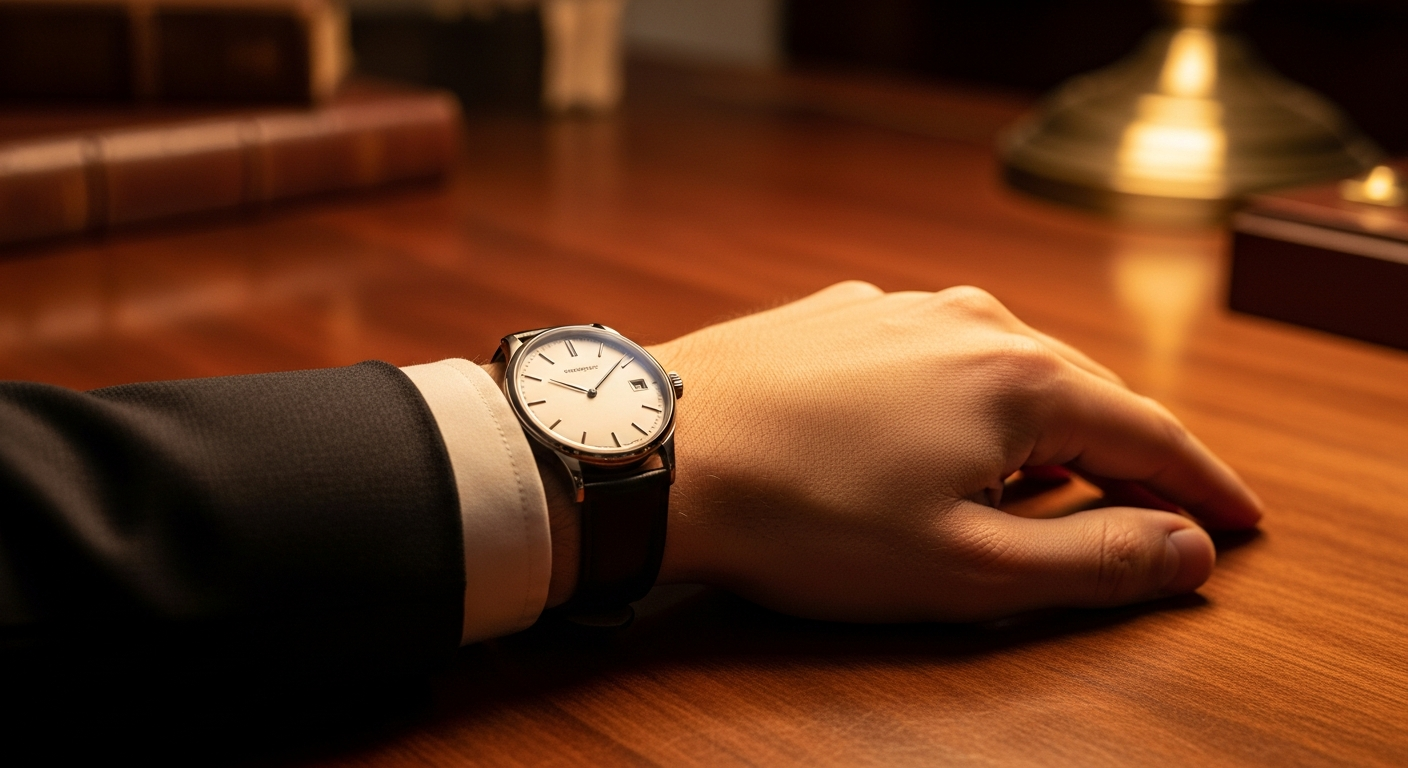
You've been thinking about it for months. Maybe years. The idea of owning a serious watch — something with history, craftsmanship, and actual resale value — has gone from idle curiosity to genuine intent. But the luxury watch market can feel impenetrable from the outside. The terminology is dense. The pricing is opaque. And the fear of overpaying or buying something fake keeps a lot of first-time buyers on the sidelines.
This guide is designed to fix that. We'll walk through everything you need to know before spending $5,000 to $50,000 on your first luxury timepiece — from choosing the right brand and reference to understanding pricing, authentication, and where to actually buy. No dealer spin. No hype. Just the information you need to buy with confidence.
Define Your Budget Before You Fall in Love
The single biggest mistake first-time buyers make is browsing without a budget. Luxury watches have a gravitational pull — you start looking at $8,000 Omegas and end up lusting after $40,000 Pateks. Set a hard ceiling before you start shopping.
Here's a realistic breakdown of what each budget tier gets you:
$3,000 – $7,000: Entry-level luxury. Tudor Black Bay 58, Omega Speedmaster Moonwatch, Cartier Santos Medium. These are legitimate luxury watches from respected manufacturers with strong movements and real resale value. Don't let anyone tell you this isn't "real" luxury — a Tudor Black Bay holds its value better than most watches at any price point.
$7,000 – $15,000: The sweet spot. Rolex Submariner 126610LN, Rolex Explorer 124270, Omega Seamaster 300M, IWC Portugieser. At this range you're buying from the most recognized names in watchmaking, with references that have genuine secondary market liquidity. You can wear these daily, enjoy them, and sell for approximately what you paid.
$15,000 – $35,000: Serious collecting territory. Rolex Daytona 116500LN, Audemars Piguet Royal Oak 15500ST, Rolex GMT-Master II Pepsi/Batman. These are the watches that define collections. Significant capital, but also significant market depth and historical appreciation.
$35,000+: Grail territory. Patek Philippe Nautilus, Aquanaut, or anything complicated. Only enter this range if you understand the market deeply or are working with a trusted advisor. The upside is enormous but so is the downside if you buy wrong.
New vs. Pre-Owned: The Case for Each
First-time buyers almost always assume they should buy new from an authorized dealer. That instinct makes sense — you want the security of knowing exactly what you're getting. But the reality of the luxury watch market makes this more nuanced than you'd expect.
Buying new from an authorized dealer (AD): For most desirable references from Rolex, Patek Philippe, and Audemars Piguet, you can't simply walk in and buy what you want. Wait lists for popular models stretch from months to years. Dealers prioritize existing clients with purchase history. If you're a first-time buyer walking into a Rolex AD asking for a Submariner, you'll likely be told there's a wait — and that wait may never end.
However, for brands like Omega, IWC, Cartier, and Tudor, authorized dealer availability is much better. You can often buy what you want on the spot, sometimes with a discount. If you're eyeing a Speedmaster or Santos, the AD route is straightforward and recommended.
Buying pre-owned: The secondary market is where most luxury watch transactions happen. Sites like Chrono24, WatchBox, Hodinkee, and Crown & Caliber provide access to virtually every reference at transparent market pricing. You'll pay market price (sometimes above retail for desirable references), but you skip the games and get what you want immediately.
The key advantage of pre-owned: you know the market value. A pre-owned Submariner at $13,500 is priced by supply and demand, not by dealer allocation. There's no hidden markup beyond what the market supports. And if you buy right, your depreciation curve is nearly flat — someone else already absorbed the steepest part.
The References That Hold Value Best
Not all luxury watches are created equal when it comes to resale value. Some brands and references depreciate the moment you walk out the door. Others appreciate. Knowing the difference is critical for a first-time buyer.
Rolex sport models are the gold standard for value retention. The Submariner, GMT-Master II, Daytona, and Explorer have all held or appreciated over the past decade. Rolex controls supply tightly, demand exceeds production, and the brand recognition is unmatched. If you buy a current-production Rolex sport model at market price today, history suggests you'll sell it for a similar price in five years.
Patek Philippe holds its value exceptionally well across most references, but the entry price is much higher. The Nautilus and Aquanaut have seen extraordinary appreciation, though they corrected significantly from 2022 peaks. Patek's Calatrava and complicated watches also hold value but are less liquid.
Audemars Piguet Royal Oak models retain value strongly, particularly the 15500ST and 15202ST. AP has built genuine scarcity and brand prestige over the past decade.
Omega depreciates more from retail but has excellent value in the pre-owned market. A Speedmaster purchased pre-owned at $5,500 is unlikely to drop much further — the floor is well established. This makes Omega one of the smartest first-watch purchases from a total cost of ownership perspective.
Tudor offers similar dynamics at a lower price point. The Black Bay 58, purchased pre-owned at $3,000–$3,500, represents extraordinary value for a watch with an in-house movement and genuine heritage.
Warning signs: Fashion watches from brands like Hublot, TAG Heuer (most references), and limited editions from micro-brands tend to depreciate significantly. Avoid anything positioned as "limited" but produced in quantities over 500 — real scarcity drives value, manufactured scarcity doesn't.
Authentication: How to Avoid Fakes
The counterfeit luxury watch market is a multi-billion dollar industry, and fakes have become frighteningly sophisticated. A high-quality fake Rolex Submariner can fool casual inspection — the weight is right, the sweep is right, even the cyclops magnification looks correct. Here's how to protect yourself.
Buy from reputable sources: This is your first and strongest line of defense. Established dealers like Chrono24 (with their Trusted Checkout program), WatchBox, Hodinkee, and Bob's Watches all authenticate inventory before selling. You'll pay slightly more than a private sale, but the authentication is worth every penny on your first purchase.
Demand documentation: Original box, papers, warranty card, and purchase receipt significantly reduce fraud risk and add 10-20% to resale value. A watch without papers isn't necessarily fake, but it requires more scrutiny.
Serial number verification: Every major manufacturer engraves serial numbers on the case. Rolex serials can be checked against known ranges for production year verification. Patek Philippe and AP maintain their own registries. Ask for the serial number before purchasing and verify it independently.
Movement inspection: If you're spending over $10,000, get the watch inspected by an independent watchmaker before finalizing the purchase. A 15-minute inspection costs $50–$100 and can identify fake movements, replacement parts, or undisclosed service history. This is non-negotiable for private sales.
Red flags to walk away from: Prices significantly below market value ("too good to be true" is exactly that). Sellers who refuse to meet in person or use escrow. Watches with mismatched serial numbers between the case and papers. Listings with stock photos instead of actual photographs. Pressure to complete the transaction quickly.
Where to Buy: Platforms Ranked
The landscape of luxury watch buying has transformed over the past five years. Here are the major platforms, ranked by trust and value for first-time buyers:
Chrono24: The world's largest watch marketplace with over 500,000 listings. Trusted Checkout provides buyer protection and escrow. Prices are transparent and searchable. This is where most educated buyers start because you can compare hundreds of listings for any reference instantly. The downside: it's a marketplace, so quality varies by dealer. Stick to sellers with high transaction counts and positive reviews.
WatchBox: A vertically integrated dealer that buys, certifies, and sells. Every watch is authenticated in-house. Pricing is fair (sometimes slightly above Chrono24) but the authentication guarantee and return policy make it excellent for first-time buyers who want zero risk.
Authorized dealers: If you're buying Omega, Tudor, Cartier, or IWC, the AD route is straightforward. You get a factory warranty, guaranteed authenticity, and sometimes a discount. For Rolex, Patek, and AP, good luck — but register your interest anyway.
Auction houses (Phillips, Sotheby's, Christie's): Best for rare and vintage pieces. Not recommended for first-time buyers unless you're specifically chasing a unique reference. Buyer's premiums add 20-26% to the hammer price, which catches novices off guard.
Private sales (forums, social media): The best prices but the highest risk. Watchuseek, Rolex Forums, and Reddit's r/WatchExchange have active communities. Always use escrow or meet in person at a jeweler who can verify the watch. Never wire money to a stranger.
Condition Matters More Than You Think
A "pre-owned" watch can mean anything from "tried on once and put back in the box" to "worn daily for 15 years and serviced twice." The condition dramatically affects pricing.
New/Unworn: Full stickers, never worn, complete set. Commands a 10-20% premium over standard pre-owned pricing. Worth it if you want the full unboxing experience and maximum future resale value.
Excellent/Mint: Minimal signs of wear, no significant scratches or dings. This is the sweet spot for most buyers — you save 10-15% versus unworn and the watch looks essentially new.
Very Good: Light wear consistent with careful use. Minor desk-diving scratches on the bracelet clasp, perhaps a small mark on the case. Most of these can be polished out, but polishing removes metal and purists prefer unpolished cases. Priced 15-25% below unworn.
Good/Fair: Noticeable wear, possibly service marks, replaced parts, or aftermarket modifications. Significant discount but potentially costly to restore to original condition. Not recommended for first-time buyers unless you're buying a beater.
The golden rule: buy the best condition you can afford. A mint Submariner at $14,000 is a better purchase than a worn one at $12,000 — the $2,000 premium is recovered and then some at resale.
Box and Papers: The 10-20% Premium
In the watch world, "full set" means original box, warranty card, instruction manual, hang tags, and purchase receipt. A complete set adds measurable value — typically 10-20% over the same watch sold as "watch only."
Why does a cardboard box matter so much? Three reasons. First, it helps verify authenticity — matching serial numbers between the warranty card and case back are a strong anti-fraud signal. Second, it documents provenance and service history. Third, the next buyer will want the full set too, so it preserves your resale value.
If you're choosing between two identical watches and one has full box and papers for $1,500 more, buy the full set. You'll recoup that premium when you sell.
The Total Cost of Watch Ownership
The sticker price isn't the full story. Budget for these additional costs:
Servicing: Mechanical watches need a full service every 5-10 years. Rolex service costs $800–$1,200. Omega is similar. Patek Philippe and AP run $1,500–$3,000+. This is non-negotiable — skipping service reduces accuracy and eventually damages the movement.
Insurance: A $15,000 watch should be insured. Specialized watch insurance (Hodinkee Insurance, JEWELERS MUTUAL) runs about 1-2% of value annually. That's $150–$300/year for peace of mind against theft, loss, or damage.
Opportunity cost: Capital locked in a watch isn't earning returns elsewhere. A $30,000 watch that holds its value perfectly still costs you whatever that $30,000 would have earned in the market. Factor this in — watches are a lifestyle asset first, an investment second.
Sales tax and import duties: Depending on where you buy, sales tax can add 5-10% to the purchase price. Some states and countries are more favorable than others. Pre-owned watches bought from private sellers may not incur sales tax depending on jurisdiction.
Your First Watch Action Plan
Here's the exact process we'd recommend for a first-time buyer:
Step 1: Set a firm budget and stick to it. Include servicing and insurance in your calculation.
Step 2: Research 3-5 references within your budget using LuxMetrix fair market values. Understand what each trades for, not what dealers say it's worth.
Step 3: Try them on in person. Visit an authorized dealer or a pre-owned showroom. No amount of online research replaces the feeling of a watch on your wrist. The 41mm case you loved in photos might wear too large. The dial color might look different in person.
Step 4: Buy from a reputable platform with buyer protection. For your first purchase, pay the slight premium for authentication and return policies. Chrono24 Trusted Checkout or WatchBox are safe bets.
Step 5: Demand full set (box, papers, warranty card) and verify the serial number independently before completing the transaction.
Step 6: Insure it. Register the serial number. Enjoy it.
The luxury watch market rewards patience and knowledge. Rushing into a purchase because of hype or FOMO is how people overpay. Take your time. The right watch at the right price will be there when you're ready.
Track Your Watch's Value — Complimentary Vault Access
Once you own a luxury watch, knowing its current market value isn't optional — it's essential. LuxMetrix provides transparent fair market valuations updated daily, powered by real marketplace listings and trusted auction results. No guesswork. No dealer markup. Just data.
Become a Founding Member — the first 1,000 members receive complimentary Vault access for 12 months ($1,188 value). Track your collection's value in real time, get buy/hold/sell signals, and be first to access new features as we expand into handbags, cars, jewelry, and more.
LuxMetrix provides fair market value estimates based on publicly available data. These are not financial recommendations or appraisals. Always do your own research before making investment decisions.