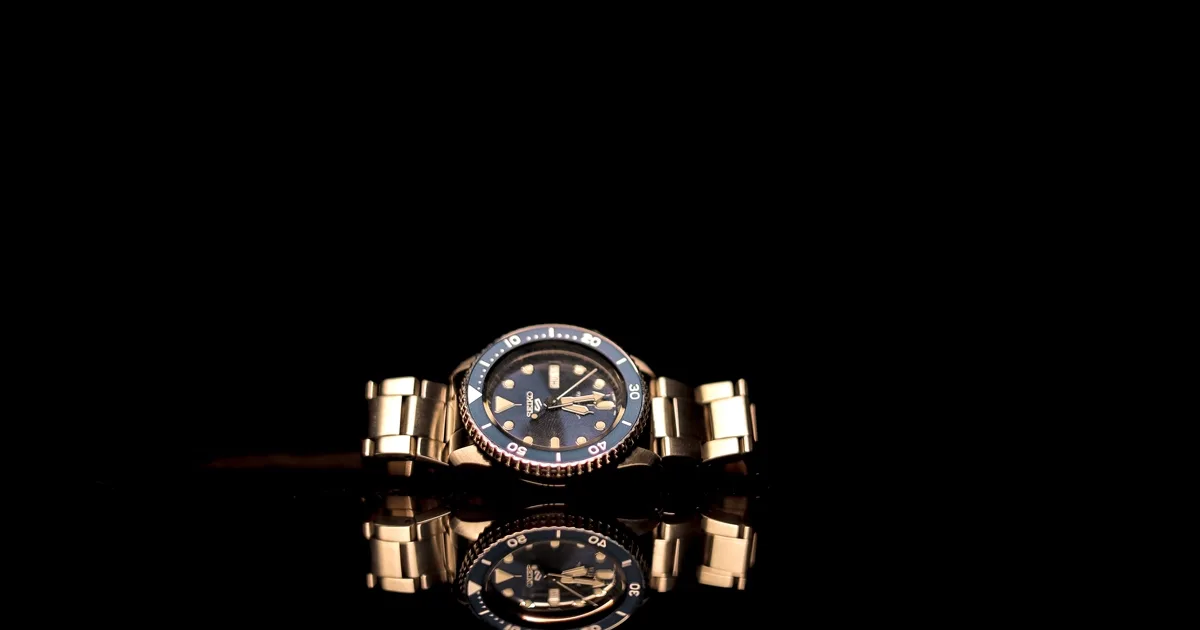
A luxury watch is a finely made watch, usually mechanical, from an established maker, where the movement, the finishing and the name are worth far more than the materials. Price alone doesn't define one, but the range is wide: as of November 13, 2026, LuxMetrix values a pre-owned Tudor Black Bay 58 at $3,790 and a Patek Philippe Nautilus 5711/1A at $146,590.
What makes a watch a luxury watch?
Four things separate a luxury watch from an ordinary one.
- The movement. Most luxury watches are mechanical, powered by a spring rather than a battery. The top brands design and build their own movements ("in-house"), which takes years of engineering and is hard to copy.
- Finishing. Polished bevels, brushed surfaces and decorated movement parts are done largely by hand, often in places the owner never sees.
- Accuracy standards. Many luxury movements are certified chronometers, tested by the Swiss COSC institute. Some brands go further: Rolex tests its finished watches to within −2/+2 seconds a day.
- The maker's history. Decades of reputation, iconic designs and controlled supply are what keep values high on the secondary market.
What does "Swiss Made" actually mean?
Since January 1, 2017, a watch can carry "Swiss Made" only if at least 60% of its manufacturing costs are incurred in Switzerland, its movement is Swiss, and it is cased up and given its final inspection in Switzerland. Technical development must also happen there. It is a meaningful standard, but it still allows up to 40% of the cost to come from abroad, so the label is a floor, not proof of luxury.
What are the main luxury watch brands, and what do they cost?
| Brand and model | LuxMetrix fair value | Tier |
|---|---|---|
| Tudor Black Bay 58 | $3,790 | Entry luxury |
| Omega Seamaster 300M | $5,230 | Entry luxury |
| IWC Portugieser Chronograph | $6,618 | Entry luxury |
| Omega Speedmaster Professional | $7,280 | Entry luxury |
| Cartier Santos Medium | $8,332 | Entry luxury |
| Rolex Explorer 124270 | $9,226 | Rolex |
| Rolex Submariner No-Date | $13,758 | Rolex |
| Audemars Piguet Royal Oak 15500ST | $45,355 | Haute horlogerie |
| Patek Philippe Aquanaut 5167A | $79,145 | Haute horlogerie |
| Patek Philippe Nautilus 5711/1A | $146,590 | Haute horlogerie |
Pre-owned values as of November 13, 2026, from marketplace listings and auction results. The tiers are a rough guide, not an official ranking. Entry luxury brands offer in-house or high-grade movements from a few thousand dollars. Rolex sits in a class of its own for recognition and liquidity. At the top, "haute horlogerie" makers such as Patek Philippe and Audemars Piguet produce far fewer watches with more hand finishing, and their steel sports models trade well above what they cost new. For every Rolex reference, see our Rolex price guide.
Does a luxury watch hold its value?
Some do and many don't. Value retention depends on demand for the specific model, not the brand's prestige alone. Steel sports models from Rolex, Patek Philippe and Audemars Piguet have historically resold strongly because they are hard to buy new. Many other luxury watches lose a large share of their price once they leave the boutique. Discontinued references are a special case: the Daytona 116500LN, replaced in 2023, is valued at $31,406 today. Check the live value of the exact reference before you treat any watch as an investment. Our guide to whether luxury watches appreciate goes deeper.
How to choose your first luxury watch
Decide your budget first, then pick the brand tier that fits it. Buy the watch you want to wear, because a model you love is easier to hold through a soft market. Favour full sets with box and papers, which sell for more later. And compare any asking price with the reference's LuxMetrix value before you pay. Our first luxury watch guide walks through the full process.